Avast Backup & Disaster Recovery
Price range: KSh118.49 through KSh10,068.00
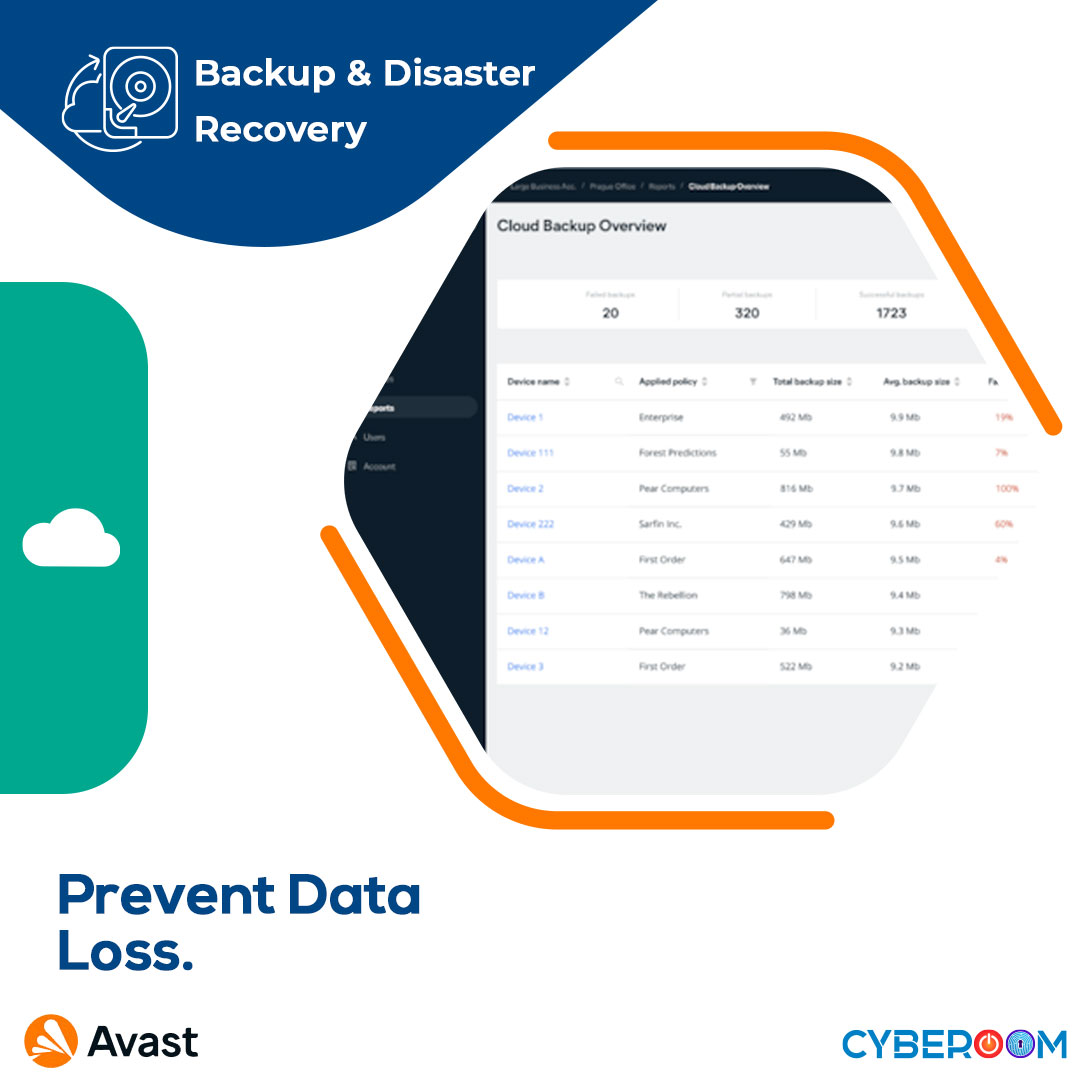
Keep your business data secure with Cloud Backup. Minimize downtime and access critical information anytime, anywhere.
Each:
Description
Why do you need backup?
With employees working from anywhere, increasing threats of ransomware, and expanding compliance needs, the risk to your business devices has never been higher. Small businesses cannot keep up and the bad guys know it! Ransomware has exploded 400% between 2018-2020.
Every business, regardless of size, needs a secure, simple, and easy-to-manage device data protection solution.
Why Avast Business Cloud Backup?
⊕ Selectable backup
⊕ Simple deployment
⊕ Restoration Options
⊕ No hardware requirement
⊕ Cloud storage
⊕ Secure encryption
⊕ Files Versioning
⊕ Selectable backup
How it works

Select your backup plan in the Business Hub

Select your backup plan in the Business Hub

Select your backup plan in the Business Hub

Select your backup plan in the Business Hub
Additional information
| Plan: | Speciality Products, Small Business, Mid-Size Business |
|---|---|
| Devices: | Up to 100 Devices |
| Storage: | 100GB/Quantity |
| Pricing: | per device / year |
With growing remote workforces, increasing threats of ransomware, and expanding compliance needs, the risk to endpoints has never been higher. SMBs cannot keep up and the bad guys know it! As a result, malware and ransomware attacks have exploded. IT administrators need a backup and recovery solution they can rely on to combat these threats.
Did you know that a business falls victim to a ransomware attack every 14 seconds and the average ransom payment is $84,116? Despite these statistics, one in five SMB leaders said they do not currently have a data backup or disaster recovery solution in place. Every company needs a secure, simple-to-configure, and easy-to-manage endpoint data protection solution. Avast Business Cloud Backup safeguards your most critical business data and fulfills backup and retention requirements.
Google Drive, Dropbox, OneDrive, and other services like these are considered cloud storage, not cloud backup. That means they are not automated or designed for the recovery of lost files like paid backup programs. Think of it this way: Google Drive and Dropbox are similar to self-storage units, where you put things that can’t fit or don’t belong in your home. Cloud backup, in contrast, is like building an exact copy of your home so that if your current home burns down, you’ll have another one ready for you. Obviously, the replica home is going to cost more, but at least you’ll have more than a garage full of random stuff should the worst happen.
Yes. We encrypt the files before they leave your computer and encrypt them again during transit to one of our data centers, utilizing the same security technology that is used in online banking and e-commerce transactions. Your files remain encrypted on our servers, which are housed in state-of-the-art data centers that are guarded 24 hours a day, 7 days a week.
Avast Business Cloud Backup utilizes a powerful combination of symmetrical and asymmetrical encryption. The United States government recently approved 192-bit AES encryption as the preferred method for protecting top-secret information. Our Cloud Backup solution uses an even more secure 256-bit AES encryption level. Your data is secured by this robust encryption methodology, both while being transferred offsite and also during its storage.
Furthermore, multi-factor authentication (MFA) offers an additional security layer for accessing backup data.
At a minimum, scheduling cloud backups for once a week is generally considered a good practice. Depending on your bandwidth, daily or even hourly is also acceptable. If your users frequently create and modify files, you’ll want to run backups more often.
Businesses require more robust backup solutions than consumers. Security, first and foremost, is critical for businesses - not just to protect themselves and their customers, but also to comply with the standards that their customers and regulators expect. Should a data breach occur, a business needs to be able to confidently state in a court of law that it took the necessary precautions to protect user data.